RV Cellular Setup for Reliable Internet on the Road 📡
A strong RV Cellular Setup is one of the easiest ways to stay connected with the right setup. You can work, stream, and plan trips without stress. In many places, cellular internet works better than you expect.
Also, you do not need a complex system. A simple setup can be both reliable and easy to manage. As you travel, you can adjust it without starting over. Because of this, cellular is a great fit for both full-time RVers and weekend trips.

What Makes an RV Cellular Setup Actually Work ⚙️
First, every setup has a few key parts. When these parts work together, your connection improves.
- Router: This is the brain of your system. A real router works better than a phone hotspot. It handles more devices and keeps speeds stable.
- Data Plan: Your carrier matters. Coverage changes by location. So, pick a plan that fits where you travel most.
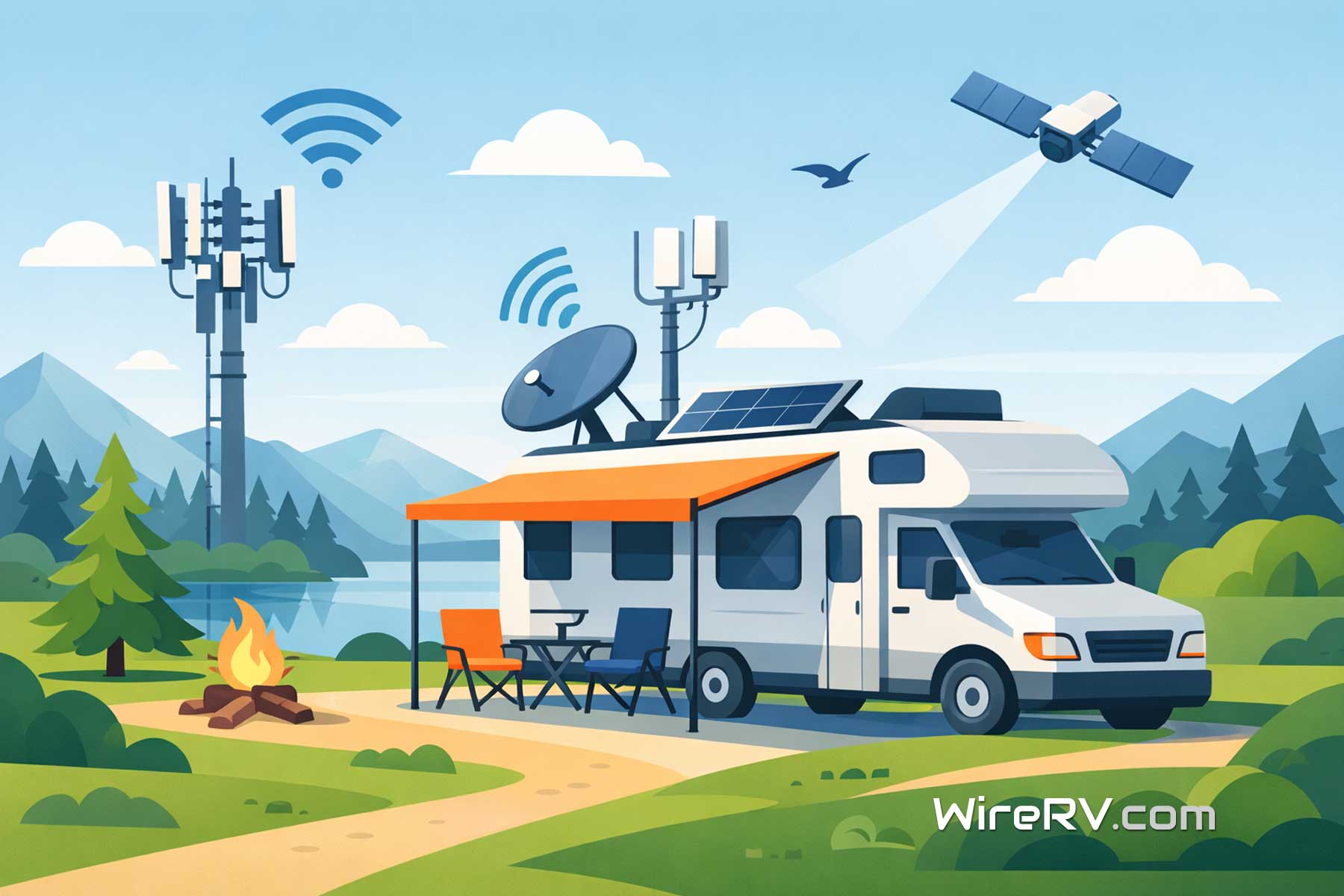
- Signal Strength: External antennas boost your signal. They help you connect even when towers are far away.
- WiFi Distribution: Your router connects all your devices. This keeps your phones, laptops, and TVs running smoothly.
Because of this, you should focus on the full system instead of a basic RV WiFi setup. One upgrade alone will not fix everything. Instead, build a setup where each part supports the others.
The Best RV Cellular Setup (Simple and Reliable) 🧩
Now, let’s build a setup that works in real life.
Core Setup (What You Need)
- 5G Cellular Router: Choose a router made for travel. It keeps your connection stable and supports many devices at once.
- Primary Carrier Plan: Pick a strong network like Verizon, AT&T, or T-Mobile. Your choice should match your travel routes.
- If you are skipping satellite, this type of setup becomes even more important.
- External MIMO Antenna: This is a key upgrade. It pulls in a stronger signal and improves speeds in weak areas. MIMO antennas use multiple signals at once to improve performance.
Optional Add-Ons (When Needed)
- Signal Booster: Use this in very weak areas. It can help when your signal is barely usable.
- Secondary Carrier: This helps if your main network fails. It adds flexibility when you travel to new regions.
In most cases, this setup is enough for work, streaming, and daily use. You can always upgrade later if your needs change.
Why This RV Cellular Setup Works So Well 🔍
This setup focuses on consistency. Speed matters, but stability matters more.
For example, antennas often work better than boosters in normal conditions. They pull in cleaner signals and reduce drops. Also, using more than one carrier gives you better coverage across the country.
As a result, your internet works in more places. You spend less time troubleshooting and more time enjoying your trip.
Common RV Cellular Setup Mistakes to Avoid ⚠️
Many RVers make simple mistakes. These can hurt performance.
- Using only one carrier everywhere
- Relying on a phone hotspot as your main solution
- Buying a booster before improving your antenna setup or understanding signal strength
- Expecting perfect service in remote areas
Instead, build a balanced system. Start with a strong base. Then add upgrades only when needed. Small changes can make a big difference.
When to Add a Backup Internet Option 🔁
Sometimes you need a backup. This is true if your work depends on internet.
For example, a second carrier can keep you online when signals change. You can also switch plans if one network slows down.
Because of this, many RVers add a backup after they test their main setup. It gives peace of mind on longer trips.
RV Cellular Setup vs Other Internet Options 📊
Cellular internet is simple and flexible. It works well in many places, especially near towns and highways.
However, other options like satellite systems can help in remote areas. For example, satellite systems can reach places with no cell service. Still, they often cost more and require extra setup.
So, for most RVers, cellular is the best starting point.
Final Thoughts on RV Cellular Setup 🎯
A good RV Cellular Setup does not need to be complex. Simple systems often work best.
With the right router, carrier, and antenna, you can stay connected in most places. Over time, you can improve your setup as your needs grow.
In the end, keep it simple. Test what works. Then adjust as needed. This approach helps you stay connected without overthinking your setup. 🚐✨
Leave a Reply