
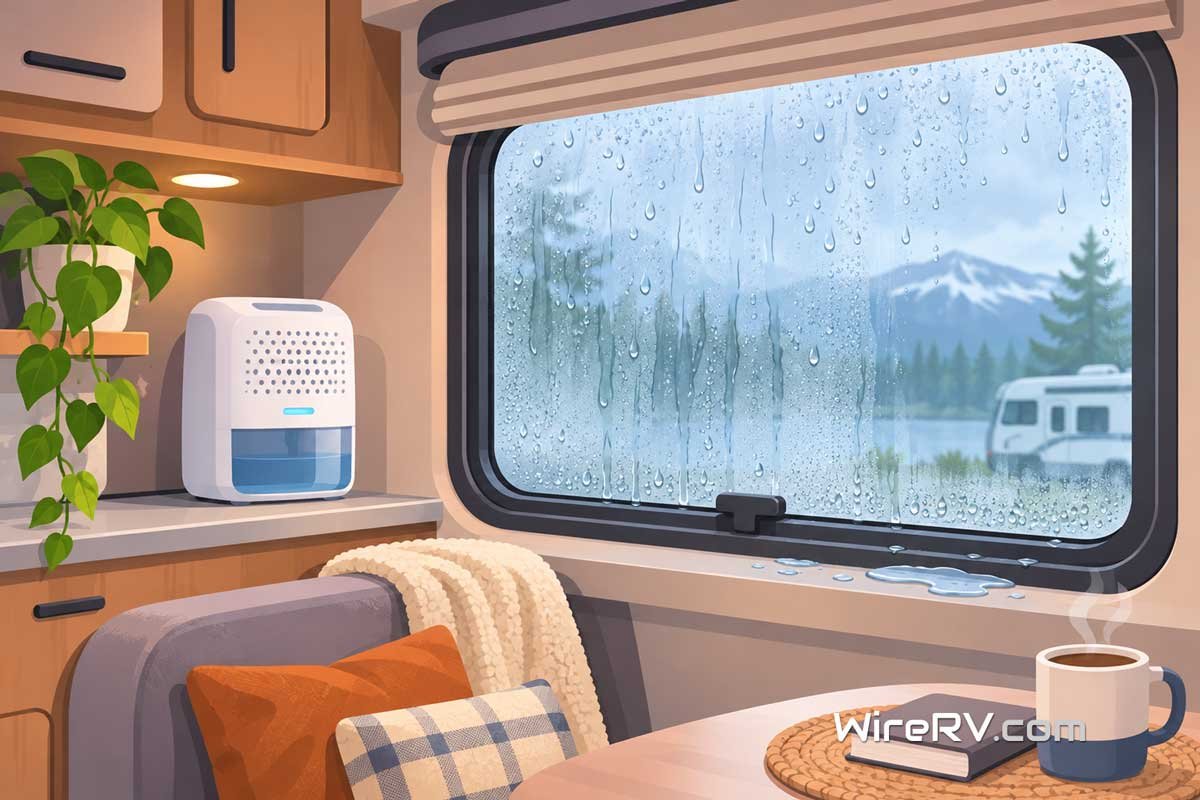
RV condensation problems can turn a comfortable camping trip into a damp, frustrating experience. Wet windows, musty smells, and moisture on walls are common signs of excess humidity. Fortunately, you can control most condensation with a few simple changes. Whether you’re camping in chilly weather or humid conditions, these tips will help keep your RV dry and comfortable. 🚐💧

💧 What Causes RV Condensation Problems?
Condensation happens when warm, moist air touches a cooler surface. As a result, water droplets form on windows, walls, and other cold areas.
Several everyday activities add moisture to your RV:
- Cooking meals without proper ventilation
- Taking hot showers
- Drying wet clothing indoors
- Breathing while sleeping
- Keeping windows and vents closed
Cold weather makes condensation more noticeable. However, humid summer conditions can also cause moisture buildup.
Because RVs have limited space, humidity can rise quickly.
🪟 Why RV Condensation Problems Cause Wet Windows
Have you ever woken up to water dripping down your RV windows?
During the night, temperatures often drop. Meanwhile, moisture from breathing and everyday activities remains trapped inside.
When that humid air reaches cold glass, condensation forms.
A little moisture is common, but repeated water buildup deserves attention. Over time, damp surfaces can damage wood, fabrics, and interior finishes.
Therefore, wipe away standing water and work on reducing the moisture source.
🌬️ Improve Ventilation to Reduce RV Condensation Problems
One of the easiest solutions costs almost nothing.
Allow fresh air to circulate throughout your RV.
Try these simple habits:
- Open a roof vent briefly when conditions allow.
- Run the bathroom exhaust fan during showers.
- Use your range hood when cooking, if it vents outside.
- Leave space between furniture and exterior walls.
- Open cabinet doors occasionally to improve airflow.
Although opening a vent during winter may seem counterproductive, removing humid air can help prevent wet surfaces.
However, avoid bringing in excessive outdoor humidity during hot, muggy weather.
🌡️ Monitor Humidity to Prevent RV Condensation Problems
You cannot always tell how humid your RV is just by looking around.
That’s why a digital hygrometer is a useful addition to your camping gear.
These small devices display indoor humidity and temperature. Many are inexpensive and require very little space.
According to the Environmental Protection Agency, indoor humidity should generally remain below 60%, with 30% to 50% being ideal.
However, condensation can still form on very cold surfaces.
Helpful RV accessory: The TempPro TP50 Digital Hygrometer makes it easy to monitor temperature and humidity inside your camper. Its compact design, clear display, and simple humidity indicator help you spot elevated humidity levels before condensation becomes a problem.
🧰 Helpful Products for RV Condensation Problems
Sometimes ventilation alone isn’t enough. Fortunately, several products can help manage excess moisture.
1. Portable RV Dehumidifier
A portable dehumidifier removes moisture from the air and collects it in a removable tank.
For frequent RV condensation problems, consider a compact compressor model with adjustable humidity settings.
However, check its size, operating temperature, and electrical requirements before purchasing.
Helpful RV accessory: This compact dehumidifier helps manage mild humidity inside your camper. Plus, its quiet operation, automatic shutoff, and continuous drain hose make it easy to use. For best results, keep your RV above 59°F. This helps the unit remove moisture more effectively.
2. Moisture Absorbers
Disposable moisture absorbers are useful inside cabinets, closets, and storage compartments.
These products can help manage RV condensation problems in small, enclosed spaces. In addition, they require no electricity, making them convenient for RV storage.
However, they cannot replace a powered dehumidifier when humidity is high throughout your camper.
Helpful RV accessory: DampRid Fragrance Free Activated Charcoal Moisture Absorbers help control excess moisture and musty odors in RV closets, cabinets, and storage areas. They require no electricity, making them ideal for parked or stored campers. For best results, place containers on stable surfaces where they won’t tip or spill.
3. RV Roof Vent Fan
A powered roof vent fan can help remove moist air from cooking, showering, and everyday activities.
Because poor ventilation can worsen RV condensation problems, better airflow may be worth the investment.
However, remember that ventilation works best when outdoor conditions allow moisture to escape.
Helpful RV accessory: The 2012 F36AR RV Roof Vent Fan helps reduce RV condensation problems by improving airflow and removing humid indoor air. It features quiet 12V operation, reversible airflow, remote controls, and an automatic rain sensor. Before purchasing, confirm your RV’s roof opening and installation requirements.
🔍 Are RV Condensation Problems Actually Water Leaks?
Not every damp spot comes from condensation.
If moisture appears after rain, around roof seams, or in one isolated location, investigate a possible leak.
Look for:
- Water stains around windows and ceiling seams
- Soft or swollen wall panels
- Persistent damp spots after rainfall
- Musty odors that never disappear
Never assume water damage is simply condensation. A hidden leak needs prompt attention.
🏕️ Keep Your RV Dry During Every Season
Preventing RV condensation problems doesn’t require expensive upgrades.
Start by improving ventilation, monitoring humidity, and drying wet surfaces. Then, consider a dehumidifier or other moisture-control products when needed.
If you’re planning a winter trip, our guide to cold weather RV camping covers additional ways to prepare your RV for chilly temperatures.
Ultimately, a dry RV is a more comfortable RV. With a few smart habits, you can protect your camper and enjoy the journey in any season. 🚐✨

Leave a Reply