
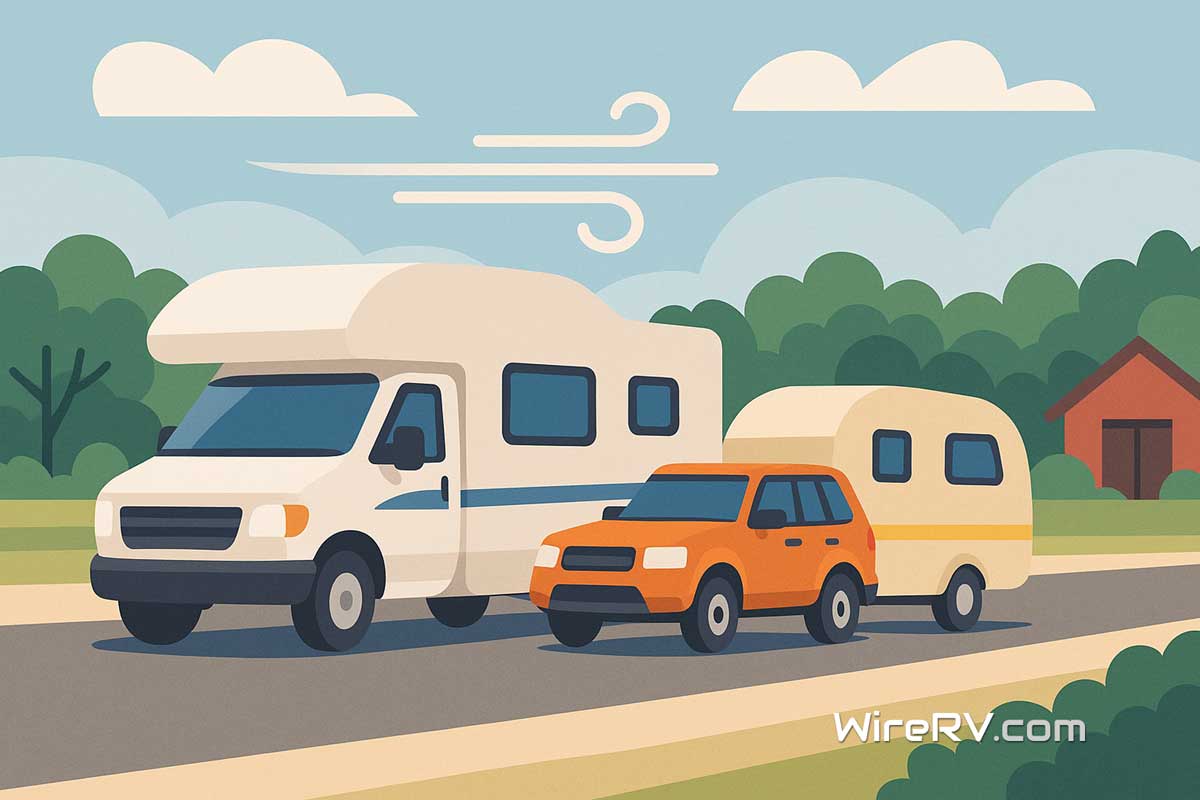
In short, RV Crosswind Driving starts with planning. Crosswinds steal steering margin, strain tires, and raise stress fast. First, know where gusts hit hardest: open plains, bridge decks, mountain passes, and gaps between buildings or trees. Next, plan your route and speed with the wind in mind so you arrive calm and in control.
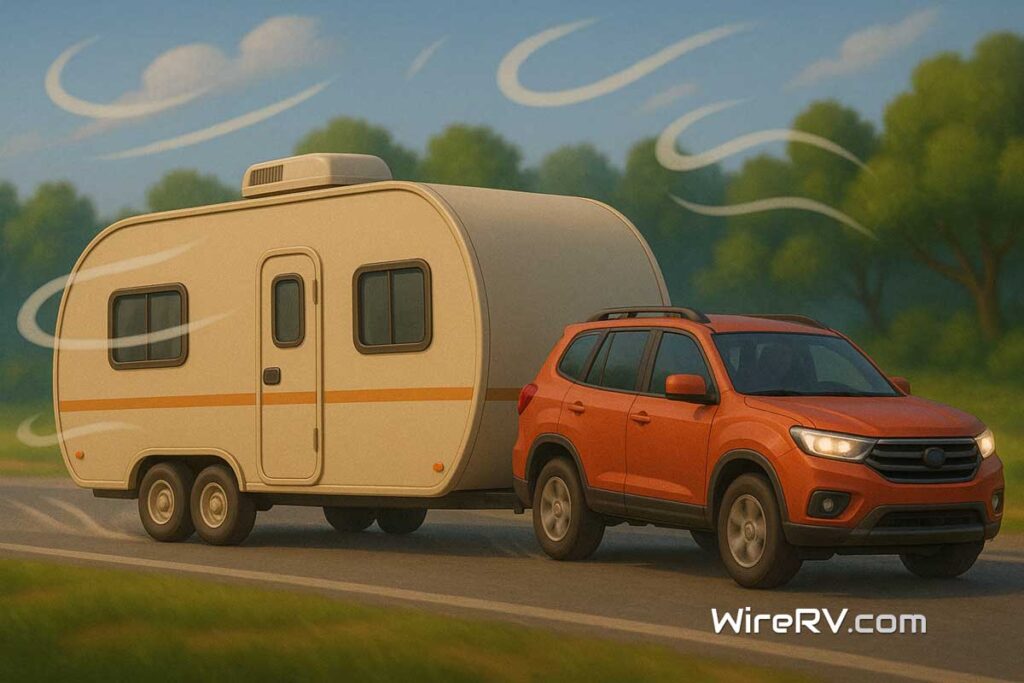
🌬️ RV Crosswind Driving tips for Different RV types
- 🛞 Set tire pressure cold. Proper PSI preserves stability and keeps temperatures down. A reliable digital tire pressure gauge makes it easy to check your tires before hitting the road.
- 🐢 Slow down. Wind force grows with speed, so cut 5 to 15 mph as needed.
- 👐 Two hands, eyes far. Grip at 9 and 3, look ahead, and leave extra following distance.
- 🛣️ Lane choice matters. When possible, use the upwind lane so the shoulder is on your leeward side.
- 🌬️ Expect gust zones. Before bridges, cuts, and passes, center the vehicle and steady the throttle.
- ↔️ Pass with margin. Trucks create a push then a pull as you pass; move gradually and return gently.
- 🅿️ Know when to stop. If constant steering correction is required, pull off in a sheltered lot and point the nose into the wind.
🚚 Towables: travel trailers and fifth wheels
Trailers introduce articulation, so sway can build quickly. Therefore, loading and hitch setup matter.
- ⚖️ Tongue or pin weight: Aim for 10–15 percent on travel trailers and follow manufacturer guidance for fifth wheels.
- 📦 Weight placement: Keep heavy items low and slightly forward of the trailer axle.
- 🔧 Hitch setup: Verify weight-distribution height and sway control tension before departure. A properly adjusted weight distribution hitch with sway control can help improve stability in crosswinds.
- 🌀 On the road: If sway starts, hold throttle steady. Do not stab the brakes. Use the manual trailer‑brake control to straighten, then ease off the throttle until stable.
- 🔁 After a gusty leg: Recheck tension and load balance at the next stop.
🚐 Motorized: Class C and Super C RV Crosswind Driving
These coaches feel crosswinds through tall sidewalls and rear overhang. Consequently, smooth inputs help most.
- ⚖️ Balance the load: Distribute gear side to side and keep weight low.
- 🛣️ Lane position: Favor the upwind lane for a safer shoulder.
- ⚙️ Power management: Downshift early on grades so you have throttle in reserve.
- 🚛 ↔️ Passing strategy: Give buses and semis wide room and return to lane gradually.
🚌 Motorized: Class A RV Crosswind Driving
Large frontal area and slab sides magnify gusts. Additionally, suspension condition affects control.
- 🧰 Inspect before trips: Check steering components, air suspension or springs, and stabilizers.
- 🐢 Speed discipline: Reduce speed sooner on exposed bridges and ridgelines.
- 📏 Buffer space: Increase following distance and avoid traveling beside high‑profile trucks in strong crosswinds.
🚐 Motorized: Class B and B+ RV Crosswind Driving
Vans have the lowest profile, yet gusts still nudge them, especially when passing.
- 🌊 Predict bow waves: As you meet large trucks, brace for a brief push then a pull.
- ✋ Stay planted: Keep two hands on the wheel and avoid abrupt corrections.
- 🧳 Watch roof loads: Cargo boxes and bikes add side area; secure them tightly.
⚠️ When to pull off
Even skilled drivers should pause when conditions exceed comfort.
- 🌬️ Sustained crosswinds near 25–35 mph with higher gusts.
- 🌪️ Debris, dust, spray, or whitecaps crossing the roadway.
- 🔄 Continuous steering correction for more than a minute.
Find a sheltered lot, park nose to wind, and reassess the route and timing.
✅ Quick pre‑trip checklist
- 🛞 Tire PSI set cold and verified with a reliable digital tire pressure gauge
- ⚖️ Tongue or pin weight confirmed
- 📦 ⬇️ Heavy gear low and forward
- 🔧 Hitch height and sway control set
- 🛰️ 🌬️ Forecast and wind direction checked
- 🧭 Speed plan for exposed segments
- 🅿️ Rest stops chosen as wind windows
With these crosswind practices, you protect tires, reduce fatigue, and keep the trip on schedule. Moreover, a calm plan turns windy days into manageable driving rather than white‑knuckle miles. Before you roll, check official wind guidance from the National Weather Service on high-wind driving precautions and when to slow or stop.
Plan your route and timing around wind windows—our National Parks RV Travel guide covers route planning and timing tips for long drives: https://wirerv.com/national-parks-rv-travel/
Leave a Reply