
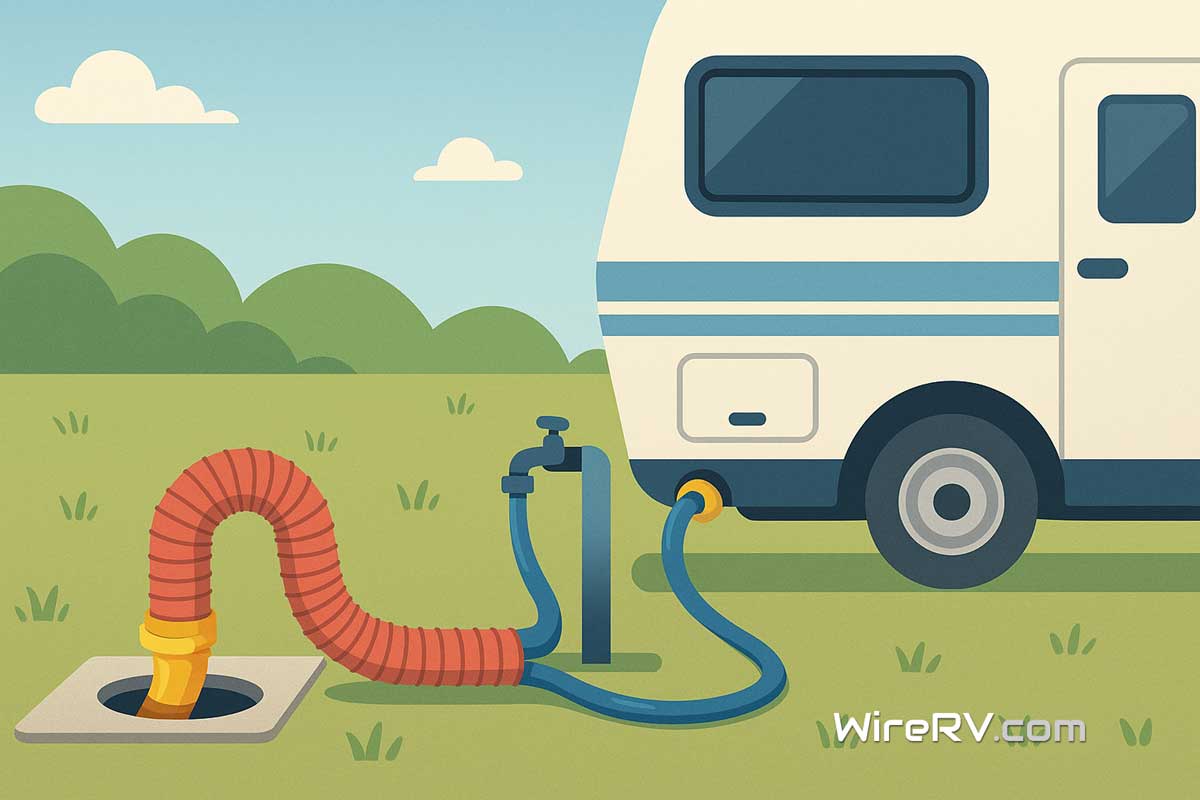
The essential RV sewer hookup gear for safe and clean connections.
When you’re setting up your RV at a new site, one of the most important steps is connecting to the sewer system. It might not be the most exciting part of RV life, but with the right gear, it can be simple, sanitary, and stress-free. Whether you’re a full-time traveler or a weekend camper, this guide will help you find the RV sewer hookup gear you actually need. To clarify, let’s make this part of RV living easy.
🚽 Why RV Sewer Hookup Gear Matters
As a matter of fact, hooking up your RV sewer line safely keeps your campsite clean and odor-free. Good gear prevents leaks, makes dumping easier, and also helps you avoid messy situations.
If you’ve ever dealt with a cracked hose or a missing connector, of course you know how frustrating that can be. But don’t worry. With a few key tools, you’ll also be ready to manage your black and gray tanks without stress.
🧰 Must-Have RV Sewer Hookup Gear
Let’s take a look at the gear you’ll need for a safe and clean connection:
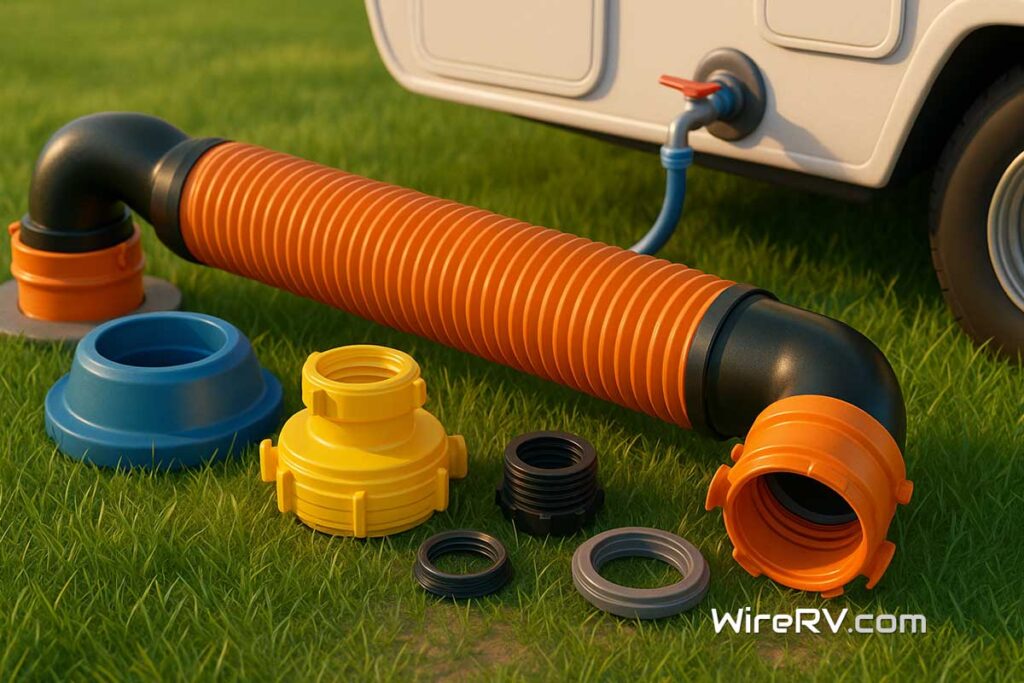
1. Sewer Hose (also called the “stinky slinky”)
This hose connects your RV to the campground’s sewer drain. At first, look for:
- A 15- to 20-foot hose
- Durable, heavy-duty material
- A clear elbow fitting so you can see when dumping is done
🛠️ Top Pick: Camco RhinoFLEX Sewer Hose Kit. It’s strong, reliable, and easy to store.
🛒 Want to browse top-rated sewer hose kits? Check out Camping World’s RV sewer hoses for trusted brands and reviews.
2. Sewer Hose Support
This keeps your hose off the ground and helps waste flow downhill.
- Accordion-style or ramp-style supports also work well
- Keeps everything moving smoothly
🛠️ Top Pick: Camco Sidewinder. It folds up small and works with most hoses.
3. Sewer Elbow Fitting
This 90-degree piece connects your hose to the sewer inlet at the site.
- Keeps the connection tight
- Helps prevent splashes and smells
Some kits include this elbow, but it’s also sold separately.
4. Sewer Donut or Seal
Some campgrounds require a seal between the elbow and sewer pipe.
- Rubber donuts create a snug fit
- Keeps smells inside and pests outside
5. Disposable Gloves
Always wear disposable gloves when dumping tanks. It’s just a good idea.
🛠️ Tip: Keep a box of gloves in your outside storage bay. Use them once, then toss.
6. Black Tank Rinse Hose
Use a separate hose to flush out your black tank or rinse your sewer hose.
- Never use your drinking water hose for this
- Choose a different color so it’s easy to tell them apart
🛠️ Tip: Use an orange or black hose for black tank flushing.
🧼 Helpful Extras to Consider
- Clear hose connector: Gives a better view during the dump
- Twist-on waste valve: Adds an extra shut-off just in case
- Tank treatment tabs: Help break down waste and control odors
🪣 Tips for Clean-Up and Storage
After dumping your tanks:
- Use your rinse hose to flush the sewer hose
- Let it drain completely
- Cap both ends to avoid drips
- Store it in a bin away from any fresh water gear
Never keep sewer gear inside your living space. Store it in the utility bay or a sealed container.
💡 Final Thoughts on RV Sewer Hookup Gear
It might not be the most fun part of the journey, but the right RV sewer hookup gear makes all the difference. In sum, with these tools, you’ll stay clean, avoid stress, and be ready to enjoy the road ahead.
🧭 Want more helpful RV gear guides? Check out our RV Essentials Checklist for everything you need before your next trip.