Category: RV Life

  • An Epic RV Super Bowl Tailgating Checklist to Love

    An Epic RV Super Bowl Tailgating Checklist to Love

    🏈 RV Super Bowl Tailgating Guide 🚐

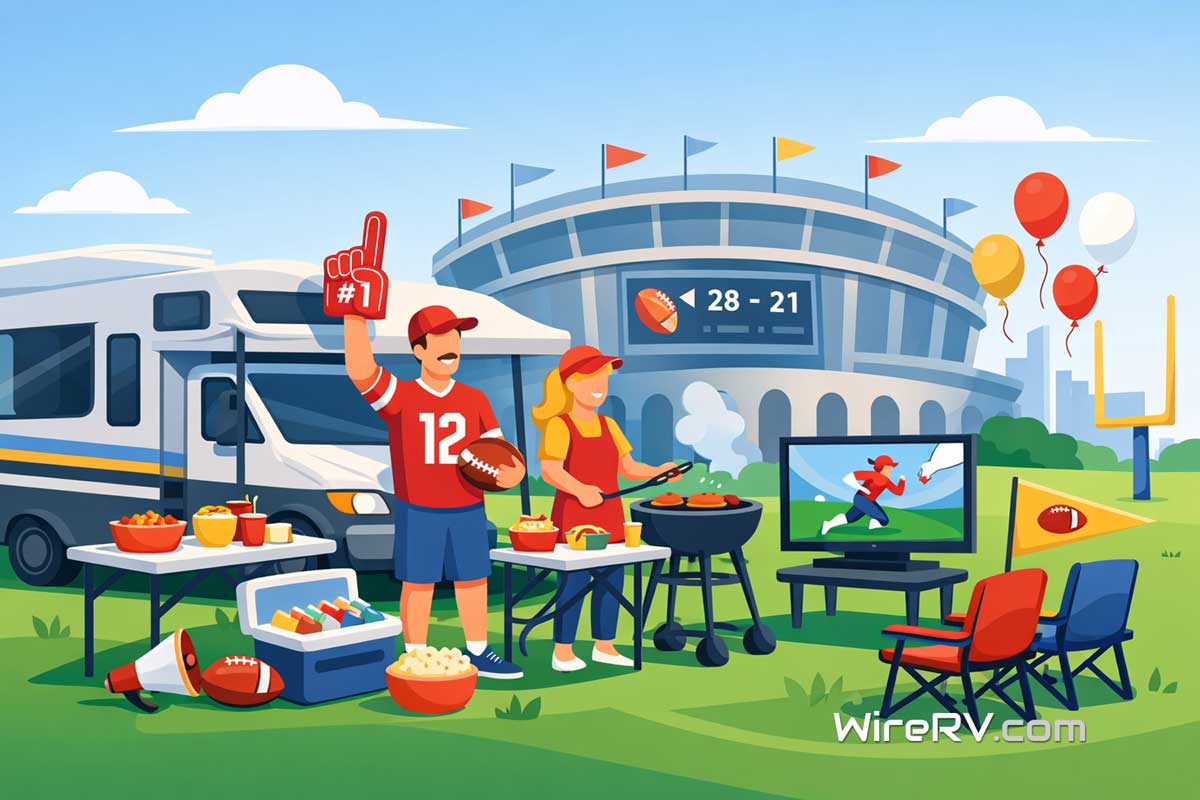
    Super Bowl Sunday and RV life are a perfect match. In fact, when you combine comfort with flexibility, RV tailgating becomes easier and more enjoyable. Whether you’re parked at a campground, hosting friends in your driveway, or rolling into a local tailgating hotspot, an RV gives you warmth, space, food, and comfort. As a result, this RV Super Bowl Tailgating Guide shows you how to plan a smooth, fun, and stress-free game day without adding extra work.


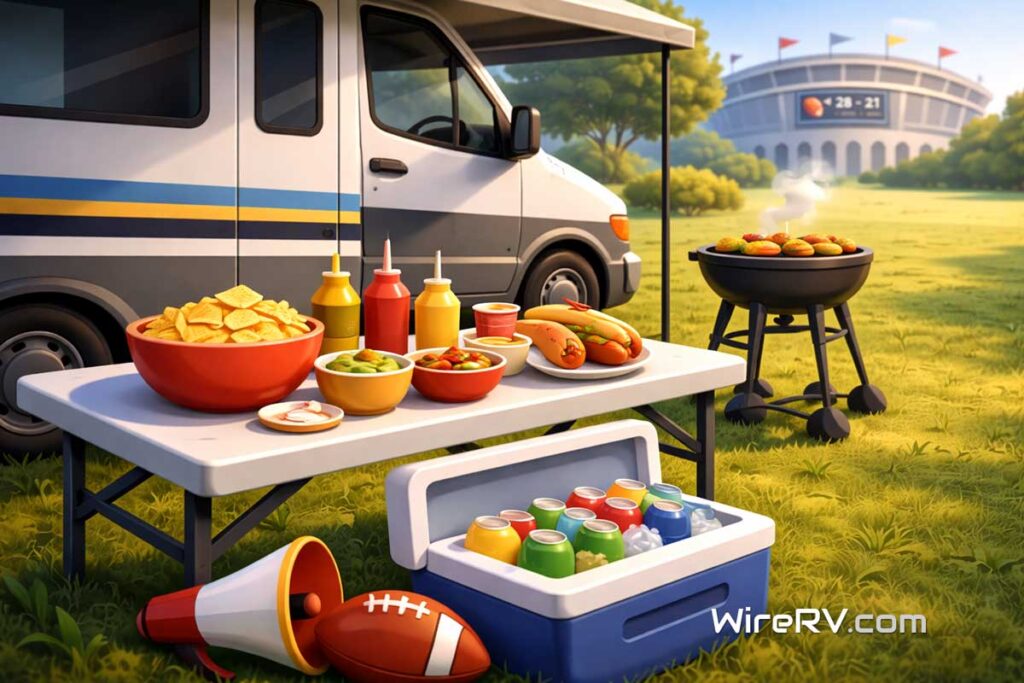
    RV Super Bowl tailgating food setup with grill and snacks beside an RV.

    🎉 Why RV Super Bowl Tailgating Is a Game-Changer

    For additional perspective on how RVs enhance tailgating and game-day travel, Camping World also shares practical RV tailgating tips that pair well with this approach: https://blog.campingworld.com/lifestyle-activities/a-guide-to-rv-tailgating/

    RV tailgating turns Super Bowl Sunday into an all-day experience instead of a few cold hours in a parking lot. For example, you are no longer limited by weather or distance. Instead, you gain flexibility and comfort. In addition, you get:

    • 🏠 A warm, surely weather-proof place to watch or prep
    • 🍳 A real kitchen and fridge for game-day food
    • 🚻 Bathrooms, which matter more than people admit
    • 👨‍👩‍👧‍👦 Space for kids, pets, and friends
    • 🎊 The ability to host without leaving home

    Because of this, whether you watch inside the RV or use it as a home base before kickoff, tailgating feels simpler and more relaxed.


    🧾 RV Super Bowl Tailgating Checklist

    Before game day, planning ahead makes everything more effortless. Therefore, use this checklist as your starting point.

    🍔 Cooking & Food Prep

    • 🔥 Grill or griddle, so hot food stays hot
    • Propane, and ideally an extra tank
    • 🍲 Slow cooker or electric skillet, since they free up time
    • 🧻 Aluminum foil, paper towels, zip-top bags
    • 🔪 Cutting board and sharp knife
    • 🍽️ Serving trays and disposable plates
    • 🧊 Cooler for drinks and overflow food

    🪑 Seating & Comfort

    • 🪑 Folding chairs, because seating fills fast
    • 🧺 Outdoor rug or mat for cleaner traffic
    • 🧣 Blankets or stadium throws, especially in cold weather
    • 🔥 Space heater, if allowed
    • 🧥 Extra jackets, gloves, and hats

    🔌 Power & Tech

    • 🔌 Extension cords and power strip, just in case
    • 📺 TV antenna or streaming device
    • 🔊 Portable speaker for pregame energy
    • 🔋 Phone chargers or power bank
    • 📡 Backup plan for spotty internet, which happens often

    🚐 RV-Specific Essentials

    • 📐 Leveling blocks, so everything stays stable
    • 🚰 Fresh water filled before arrival
    • 🚽 Gray and black tanks empty, whenever possible
    • 🗑️ Trash bags and recycling bin
    • 🧼 Wet wipes and hand sanitizer

    ⚙️ RV Super Bowl Tailgating Setup: Step-by-Step

    📍 1. Choose the Right Spot

    First, confirm tailgating rules if you are traveling. Although many stadiums allow RVs, they often limit generator use, grilling, or overnight stays. Meanwhile, if you are at home or a campground, position your RV so doors and awnings open toward the gathering space.

    🧩 2. Create Zones

    Next, divide your setup into clear zones. For instance:

    • 🍳 Cooking zone near the grill
    • 🪑 Seating zone with chairs and blankets
    • 🏈 Game zone for cornhole or football toss
    • 🍿 Food station for snacks and drinks

    By doing this, movement feels natural and crowding is reduced.

    🌦️ 3. Plan for the Weather

    Finally, expect cold, wind, or rain. Therefore, anchor lightweight items and keep towels nearby. If needed, be ready to move the party indoors.


    🍕 RV Super Bowl Tailgating Menu Ideas for RVs

    When planning food, RV tailgating works best with minimal mess and maximum flavor. Because of that, simple recipes usually win.

    ⭐ Easy Crowd Favorites

    • 🌶️ Chili or queso in a slow cooker
    • 🍔 Sliders or hot dogs
    • 🧀 Loaded nachos
    • 🐔 Buffalo chicken dip
    • 🍗 Sheet-pan wings finished on the grill

    🥨 Snacks & Sides

    • 🥔 Chips and dips
    • 🥕 Veggie trays
    • 🥨 Soft pretzels
    • 🍿 Popcorn
    • 🍓 Fruit skewers

    🥤 Drinks

    • ☕ Thermos with hot cocoa or coffee
    • 🍹 Signature mocktail or cocktail
    • 🥫 Canned drinks for easy cleanup

    Above all, prep as much as possible ahead of time so game day stays relaxed.

    For even easier prep, many hosts rely on easy RV one-pan dinners that minimize dishes while still feeding a crowd.


    🎶 Entertainment & Atmosphere for RV Super Bowl Tailgating

    Tailgating is about more than the game. In addition, atmosphere keeps energy high.

    • 🎵 Play music during pregame
    • 🎯 Set up cornhole, ladder toss, or football toss
    • 🎨 Decorate with team colors, flags, or lights
    • 🧻 Hand out simple party favors like rally towels

    Meanwhile, if kids are around, bring a football, glow sticks, or a simple craft station.


    🚨 Safety & Courtesy Tips

    Most importantly, safety and courtesy matter throughout the day.

    • 📜 Follow local tailgating rules
    • 🔥 Keep grills away from RV walls and awnings
    • 🔇 Monitor generator usage and quiet hours
    • 🧯 Have a fire extinguisher nearby
    • ♻️ Dispose of trash properly

    Ultimately, being a good neighbor keeps RV tailgating welcome.


    ✅ Quick Game-Day Recap Checklist

    Before kickoff, review the essentials:

    • Food prepped and chilled
    • Propane and power checked
    • Seating and blankets ready
    • TV or radio reception tested
    • Trash and cleanup plan in place

    🏁 Final Thoughts

    In conclusion, RV Super Bowl tailgating blends comfort, flexibility, and tradition into one experience. Whether you host a large group or keep it simple, planning makes the day easier. As a result, Super Bowl Sunday becomes fun, easy, and memorable.

    Enjoy the game — RV style 🏈🚐

  • RV Crosswind Driving: Spectacular Safety Tips You Will Love

    RV Crosswind Driving: Spectacular Safety Tips You Will Love


    In short, RV Crosswind Driving starts with planning. Crosswinds steal steering margin, strain tires, and raise stress fast. First, know where gusts hit hardest: open plains, bridge decks, mountain passes, and gaps between buildings or trees. Next, plan your route and speed with the wind in mind so you arrive calm and in control.


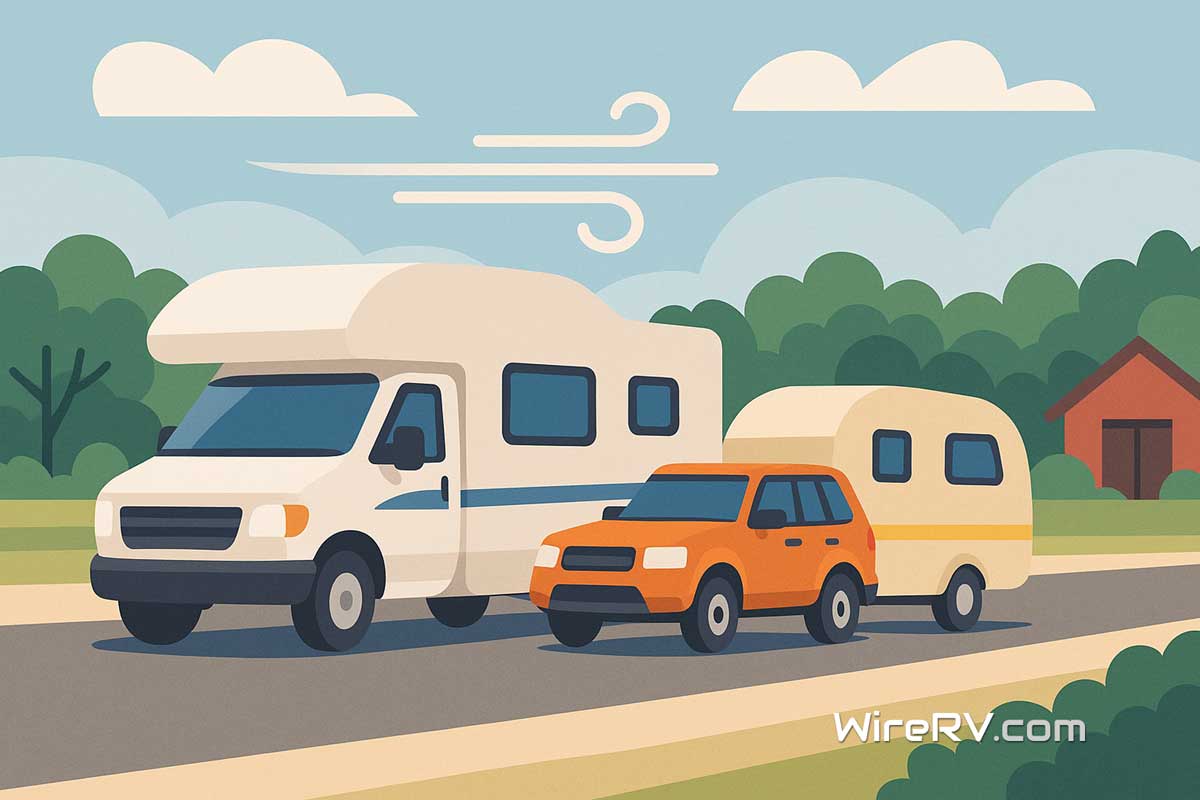
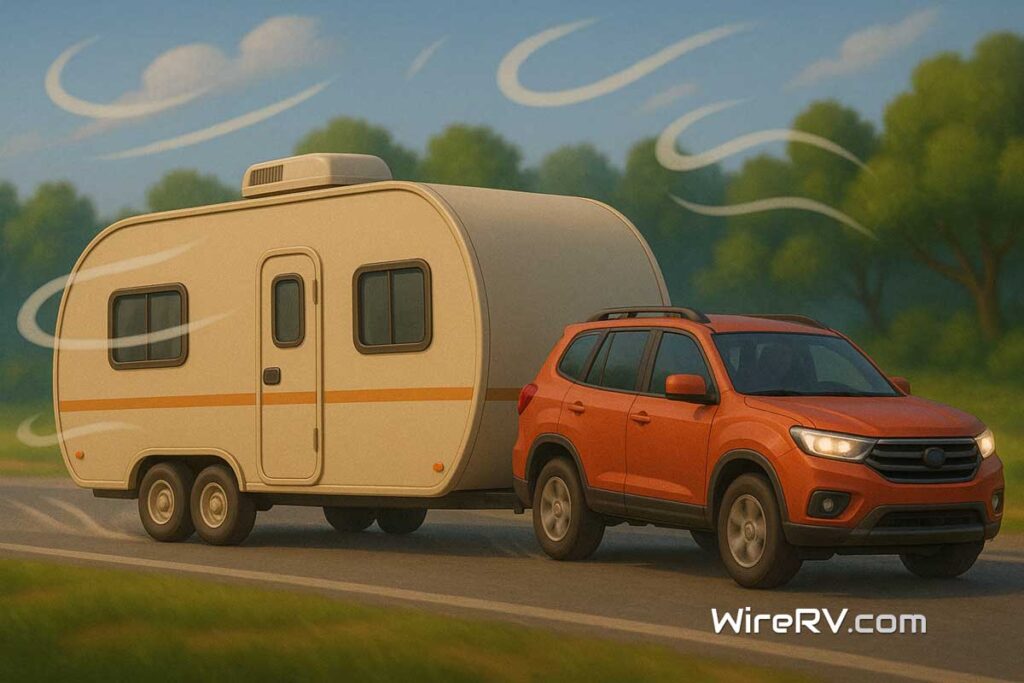
    RV crosswind driving scene with an orange SUV towing a travel trailer in strong crosswinds on a two-lane highway.
    Crosswinds push high-profile rigs; slow down, keep two hands on the wheel, and leave extra space.

    🌬️ RV Crosswind Driving tips for Different RV types

    🛞 Set tire pressure cold. Proper PSI preserves stability and keeps temperatures down.
    🐢 Slow down. Wind force grows with speed, so cut 5 to 15 mph as needed.
    👐 Two hands, eyes far. Grip at 9 and 3, look ahead, and leave extra following distance.
    🛣️ Lane choice matters. When possible, use the upwind lane so the shoulder is on your leeward side.
    🌬️ Expect gust zones. Before bridges, cuts, and passes, center the vehicle and steady the throttle.
    ↔️ Pass with margin. Trucks create a push then a pull as you pass; move gradually and return gently.
    🅿️ Know when to stop. If constant steering correction is required, pull off in a sheltered lot and point the nose into the wind.


    🚚 Towables: travel trailers and fifth wheels

    Trailers introduce articulation, so sway can build quickly. Therefore, loading and hitch setup matter.

    • ⚖️ Tongue or pin weight: Aim for 10–15 percent on travel trailers and follow manufacturer guidance for fifth wheels.
    • 📦 Weight placement: Keep heavy items low and slightly forward of the trailer axle.
    • 🔧 Hitch setup: Verify weight‑distribution height and sway control tension before departure.
    • 🌀 On the road: If sway starts, hold throttle steady. Do not stab the brakes. Use the manual trailer‑brake control to straighten, then ease off the throttle until stable.
    • 🔁 After a gusty leg: Recheck tension and load balance at the next stop.

    🚐 Motorized: Class C and Super C RV Crosswind Driving

    These coaches feel crosswinds through tall sidewalls and rear overhang. Consequently, smooth inputs help most.

    • ⚖️ Balance the load: Distribute gear side to side and keep weight low.
    • 🛣️ Lane position: Favor the upwind lane for a safer shoulder.
    • ⚙️ Power management: Downshift early on grades so you have throttle in reserve.
    • 🚛 ↔️ Passing strategy: Give buses and semis wide room and return to lane gradually.

    🚌 Motorized: Class A RV Crosswind Driving

    Large frontal area and slab sides magnify gusts. Additionally, suspension condition affects control.

    • 🧰 Inspect before trips: Check steering components, air suspension or springs, and stabilizers.
    • 🐢 Speed discipline: Reduce speed sooner on exposed bridges and ridgelines.
    • 📏 Buffer space: Increase following distance and avoid traveling beside high‑profile trucks in strong crosswinds.

    🚐 Motorized: Class B and B+ RV Crosswind Driving

    Vans have the lowest profile, yet gusts still nudge them, especially when passing.

    • 🌊 Predict bow waves: As you meet large trucks, brace for a brief push then a pull.
    • Stay planted: Keep two hands on the wheel and avoid abrupt corrections.
    • 🧳 Watch roof loads: Cargo boxes and bikes add side area; secure them tightly.

    ⚠️ When to pull off

    Even skilled drivers should pause when conditions exceed comfort.

    • 🌬️ Sustained crosswinds near 25–35 mph with higher gusts.
    • 🌪️ Debris, dust, spray, or whitecaps crossing the roadway.
    • 🔄 Continuous steering correction for more than a minute.
      Find a sheltered lot, park nose to wind, and reassess the route and timing.

    ✅ Quick pre‑trip checklist

    • 🛞 Tire PSI set cold and verified
    • ⚖️ Tongue or pin weight confirmed
    • 📦 ⬇️ Heavy gear low and forward
    • 🔧 Hitch height and sway control set
    • 🛰️ 🌬️ Forecast and wind direction checked
    • 🧭 Speed plan for exposed segments
    • 🅿️ Rest stops chosen as wind windows

    With these crosswind practices, you protect tires, reduce fatigue, and keep the trip on schedule. Moreover, a calm plan turns windy days into manageable driving rather than white‑knuckle miles. Before you roll, check official wind guidance from the National Weather Service on high-wind driving precautions and when to slow or stop.

    Plan your route and timing around wind windows—our National Parks RV Travel guide covers route planning and timing tips for long drives: https://wirerv.com/national-parks-rv-travel/

  • RV Kitchen Storage Ideas: Uplifting Upgrades You Will Love

    RV Kitchen Storage Ideas: Uplifting Upgrades You Will Love

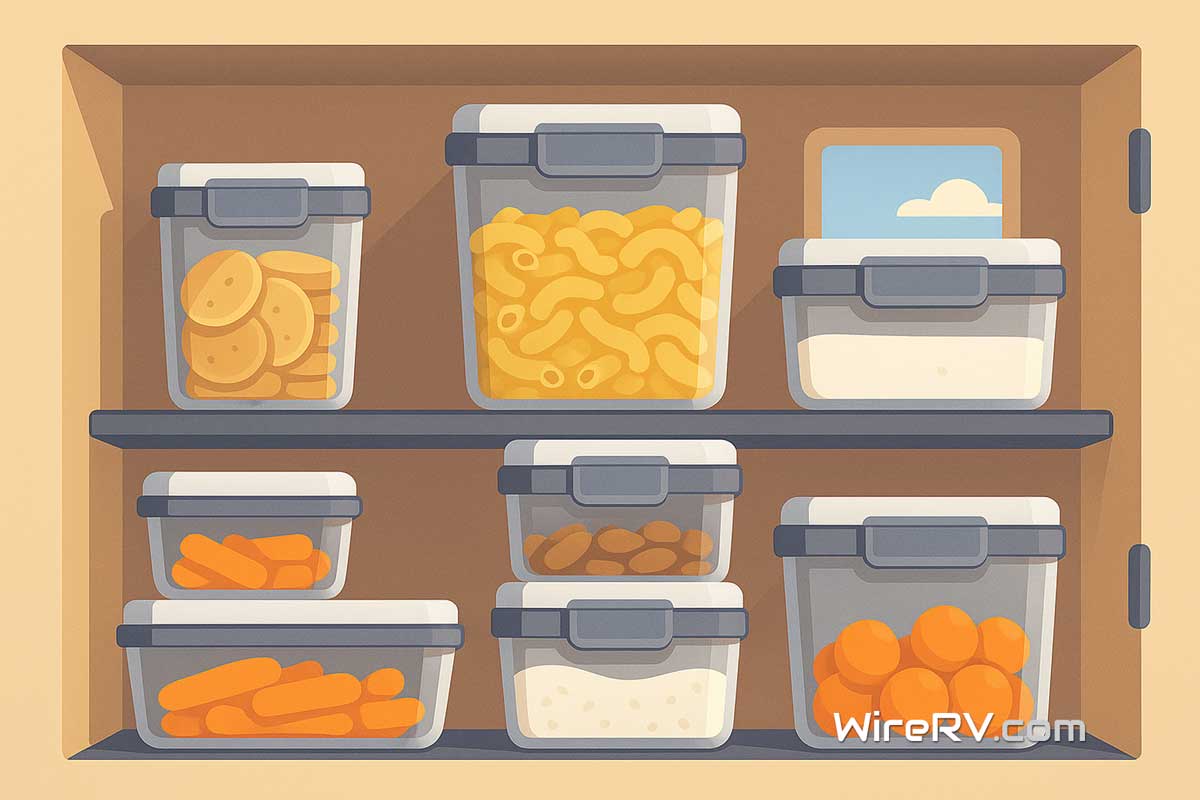
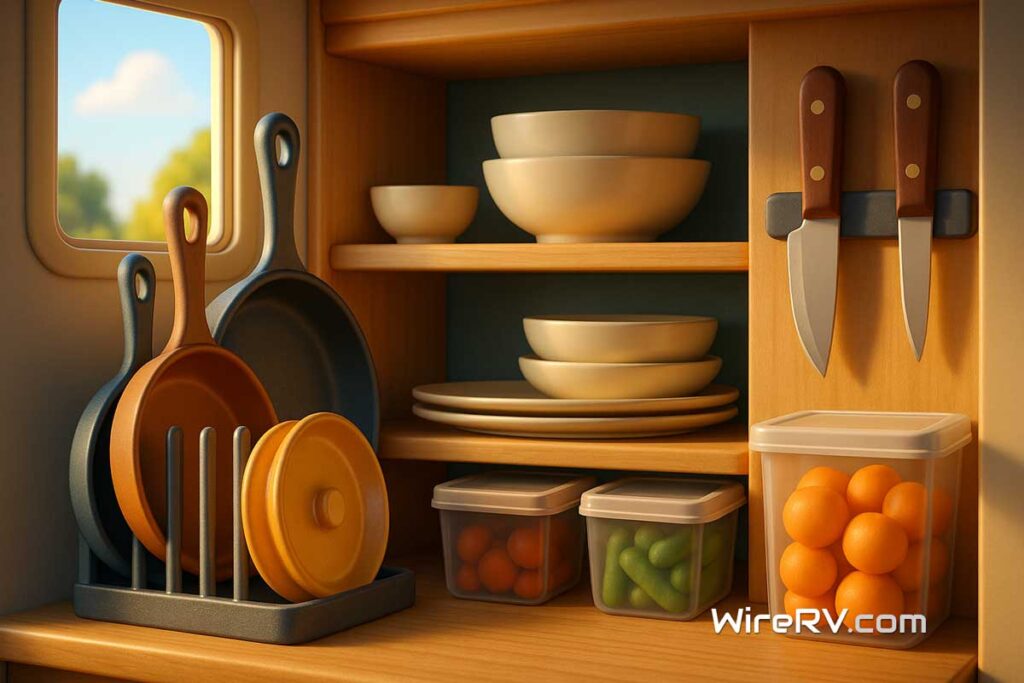
    In short, RV Kitchen Storage Ideas work best when you plan for travel. Make any rig feel bigger with fast fixes you can install in minutes. These tips also prevent rattles, stop tip overs, and keep cooking gear right where you need it for stress free cooking.


    RV kitchen storage ideas with vertical pan rack, shelf riser, and bins.

    ⏱️ Start here: a 10 minute reset

    Firstly, a clear starting point keeps the whole project simple. Spend a few minutes removing duplicates, tossing bulky packaging, and deciding where daily tasks will live. When tools stay close to their jobs you save time and avoid spills.

    • Toss obvious extras and bulky packaging
    • Create four zones: cook, prep, clean, coffee or snacks
    • Finally, give each zone a home you can reach without digging

    RV Kitchen Storage Ideas 🗂️ Drawers: divide, contain, label

    Next, drawers hide the most chaos. Simple dividers and small bins stop utensils from sliding and gadgets from rattling. A shallow tray stacked on risers creates a second level so you can separate small tools from heavier pieces.

    • Low profile drawer dividers keep utensils from drifting
    • Small bins corral tongs, peelers, and thermometers
    • Deep drawer fix: add a shallow tray on risers for a second layer
    • Quick win: label the front lip so guests can find things

    RV Kitchen Storage Ideas 🗄️ Cabinets: think vertical for instant capacity

    Meanwhile, most cabinet space is tall and underused. Standing pans like books protects coatings and frees room for bowls. Shelf risers split tall cavities into two layers, while tension bars hold cutting boards on a side wall.

    • Stand skillets in a pan and lid rack so coatings do not chip
    • Drop in a shelf riser to turn one tall cavity into two levels
    • Use tension bars to park cutting boards along a side wall
    • Nest soft trivets between heavy pots to silence travel day clatter

    🥘 While you organize, plan simpler cooking too with our Easy RV One-Pan Dinners guide: https://wirerv.com/easy-rv-one-pan-dinners/


    🚪 Doors and walls: use the air space

    Additionally, open surfaces are easy storage wins. Hooks hold mitts and spoons, a magnetic strip handles blade guarded knives or spice tins, and over door baskets keep wraps and bags off the counter. A slim caddy near the stove keeps oil and salt in easy reach.

    • Removable hooks for potholders and measuring spoons
    • Magnetic strip for blade guarded knives or metal spice tins
    • Over cabinet baskets for wraps, baggies, and gloves
    • Slim counter caddy near the stove for oil, salt, and a spoon rest

    💧 Under sink: leak smart, grab fast

    Furthermore, this area should contain drips and speed access. A lipped tray keeps water from spreading and a handled caddy groups cleaners. Keep spare trash bags together and store a tight lidded grease jar so fats never hit campground systems.

    • Slide in a lipped tray under plumbing so drips stay contained
    • Add a handled caddy for cleaning supplies
    • Keep spare trash bags and dishwasher tabs in a small bin
    • Store a tight lidded grease jar for used cooking oil

    RV Kitchen Storage Ideas 🧊 Fridge and pantry: control movement

    Likewise, food shifts while you drive. Non skid liner helps bins grip, locking containers protect dry goods, and elastic bands keep bottles steady in the door. An Eat First bin at eye level reduces waste and keeps lunches simple.

    • Line shelves with non skid liner so bins grip
    • Use clear locking containers so lids stay put while driving
    • Add elastic bottle bands on fridge door rails to stop tipping
    • Place an Eat First bin at eye level to reduce waste

    See FoodSafety.gov’s Cold Food Storage Chart for refrigerator ≤ 40°F and freezer 0°F guidelines, plus storage times for meats, deli items, and leftovers: https://www.foodsafety.gov/food-safety-charts/cold-food-storage-charts


    ❄️ Keep temps and leftovers dialed in with Keep RV Fridge Cold (fans, vents, loading tips): https://wirerv.com/keep-rv-fridge-cold/


    🛒 Shopping list: organizers that stay put

    Finally, small upgrades create a big difference in daily comfort. Choose pieces that grip, lock, or hook so they do not wander on travel days.

    • Adjustable drawer dividers
    • Vertical pan and lid rack
    • Wire or solid shelf risers
    • Command hooks or adhesive broom clips
    • Magnetic knife strip with blade guards
    • Over cabinet door basket
    • Non skid shelf liner
    • Clear locking pantry bins
    • Elastic bottle bands for fridge doors

    Bottom line: A few well chosen organizers and a short weekly reset make any RV kitchen calmer, faster, and ready to cook. When storage stays put, cleanup is quicker and camp time lasts longer.

  • Easy RV One-Pan Dinners: Epic Meals You Will Love

    Easy RV One-Pan Dinners: Epic Meals You Will Love

    Why Easy RV One-Pan Dinners Works on the Road

    On travel days, moreover simplicity wins with easy RV one-pan dinners. With one burner and one lidded skillet, you heat once, cook efficiently, and clean far less. As a result, you save propane, protect your batteries, and finish dinner sooner. Moreover, using the lid lets carryover heat do the work, which keeps moisture in and flavors bold.

    Easy RV One-Pan Dinners Time Savers:

    • Firstly, pre‑chop what you can at home and freeze it flat.
    • Next, cook once and repurpose tomorrow.
    • Finally, use steam under the lid to finish food quickly.

    Keep your fridge efficient so leftovers stay safe. For details, additionally, see Keep RV Fridge Cold.


    Gear checklist you actually need for Easy RV One-Pan Dinners

    Above all, a short list goes a long way. Specifically, bring a 10–12 inch nonstick or ceramic skillet with a tight‑fitting lid – consider a 12″ lidded ceramic nonstick pan such as the GreenPan Valencia Pro Wok with Lid – a heat‑resistant spatula, folding tongs, a compact cutting board, and a paring knife. Additionally, pack foil or parchment for oven‑safe finishes, a collapsible bowl for prep and serving, and an instant‑read thermometer for safety. Optionally, magnetic spice tins, mini squeeze bottles for oil, and also a small grease jar make life easier.


    Smart pantry staples for Easy RV One-Pan Dinners

    When space is tight, every item must multitask. Therefore, choose flexible staples:

    • Proteins: smoked sausage, canned or pouched chicken or tuna, rotisserie chicken, shrimp, or ground turkey.
    • Carbs: instant rice, shelf‑stable gnocchi, orzo, small pasta shapes, tortillas, or canned potatoes.
    • Veggies: frozen mixed veg, steam‑bag green beans or broccoli, jarred roasted peppers, canned corn, and tomatoes.
    • Sauces & boosts: salsa, pesto, BBQ sauce, coconut milk, curry paste, balsamic glaze, and tamari.
    • Seasonings: taco blend, Italian herbs, garlic powder, paprika, chili flakes, and lemon pepper.

    If you need gluten‑free swaps, use rice, potatoes, corn tortillas, GF‑labeled tamari, and certified GF gnocchi or also pasta. Similarly, keep frozen veggies on hand so you can add color and fiber at the last minute.


    Food safety and storage on the road with Easy RV One-Pan Dinners

    After dinner, act quickly. Additionally, cool leftovers in shallow containers. Then, move them into the fridge to avoid the danger zone. Afterward, reheat to 165°F and verify with an instant‑read thermometer, such as the Alpha Grillers Meat Thermometer Digital. For seafood, for instance, cook most fish and shellfish to an internal temperature of 145°F (63°C) according to the FDA. Meanwhile, organize your refrigerator so cold air can circulate; the link above also explains fans, vents, and loading. Consequently, your food stays safer for tomorrow’s lunch.


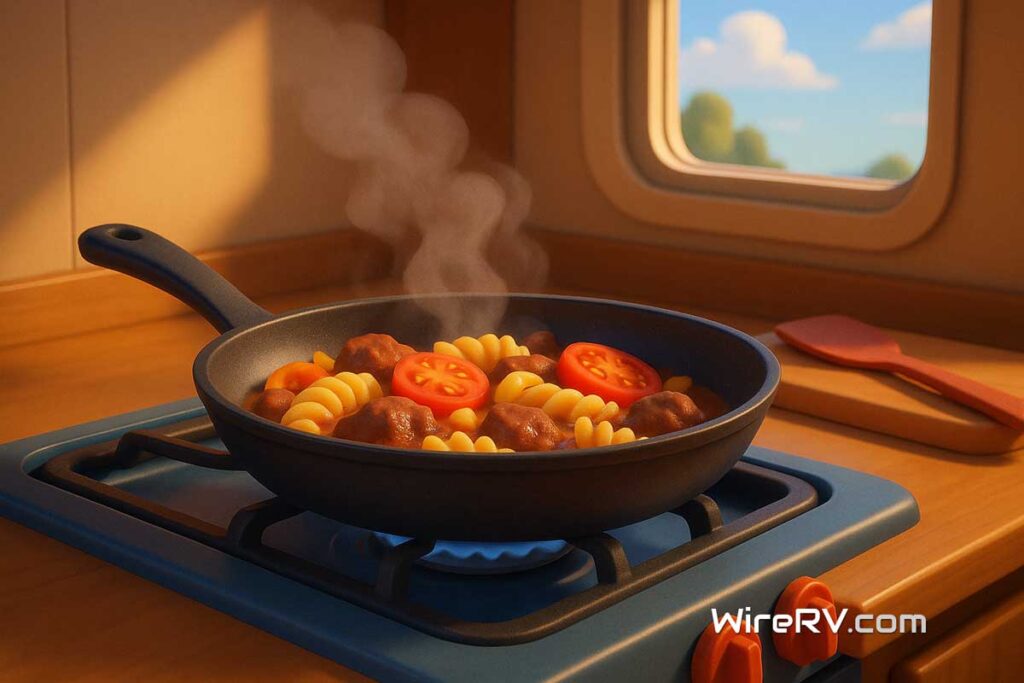
    Easy RV One-Pan Dinners in an RV kitchen, skillet with rotini, tomatoes, and peppers simmering on the stove in soft 3D lighting.

    12 Easy RV One-Pan Dinners

    Each recipe serves 3–4. If you’re feeding more people, what’s more, simply scale up ingredients; otherwise, save a portion for lunch. Wherever helpful, swaps also appear beneath each recipe.

    1) Skillet Chicken Fajita Rice (GF)

    For busy nights on the road, this Tex‑Mex skillet comes together fast; meanwhile, the salsa steams the rice so everything heats evenly.

    Ingredients

    • 1 tbsp oil
    • 1 bell pepper and 1 small onion, sliced
    • 2 cups cooked rice
    • 2 cups cooked diced chicken
    • 1 cup salsa
    • Lime wedges, cilantro

    Steps

    1. First, heat oil and cook peppers and onion 3–4 minutes.
    2. Next, stir in chicken, rice, and salsa. Then cover 3–4 minutes until hot.
    3. Finally, finish with lime and cilantro.

    Swap: Alternatively, add canned corn for extra bulk.

    2) Sausage, Peppers, and Potatoes (GF)

    On cooler evenings, this hearty trio hits the spot; moreover, canned potatoes make it weeknight‑easy without extra prep.

    Ingredients

    • 12 oz smoked sausage, sliced
    • 2 cups potato cubes, par‑cooked or canned
    • 1 bell pepper, sliced
    • 1 tsp garlic powder, 1 tsp Italian seasoning

    Steps

    1. First, brown sausage 3 minutes.
    2. Then add potatoes and pepper. Cover 6–8 minutes, stirring once.
    3. Lastly, season and serve.

    Swap: Likewise, sweet potatoes add a touch of sweetness.

    3) Pesto Tortellini with Greens

    When you crave comfort, this creamy, herby pasta delivers quickly; in addition, spinach wilts right in for a no‑fuss veg boost.

    Ingredients

    • 1 pint cherry tomatoes, halved
    • 18 oz refrigerated tortellini
    • 1–2 tbsp water
    • 3 tbsp pesto
    • 2 cups baby spinach

    Steps

    1. To begin, sauté tomatoes 2 minutes.
    2. Next, add tortellini with a splash of water. Then cover 5–6 minutes.
    3. Finally, stir in pesto and spinach to wilt.

    Swap: Alternatively, use shelf‑stable gnocchi and cook the same way.

    4) Shrimp Fried “Minute” Rice (GF with GF tamari)

    If you’ve got leftover rice, turn it into dinner in minutes; likewise, a quick scramble adds protein without dirtying another pan.

    Ingredients

    • 1 tbsp oil
    • 2 eggs, beaten
    • 12 oz shrimp, peeled
    • 3 cups cooked rice
    • 1 cup frozen peas
    • 2–3 tbsp tamari or soy sauce
    • Sliced scallions

    Steps

    1. Firstly, scramble eggs and set aside.
    2. Then sauté shrimp 2–3 minutes; add rice and peas. Stir‑fry 3 minutes.
    3. Finally, add tamari and eggs back in; garnish with scallions.

    Swap: If shrimp isn’t available, use canned chicken instead.

    5) Tex‑Mex Beef and Beans (GF)

    For a crowd‑pleaser, this skillet tastes like taco night with fewer dishes; plus, pantry beans stretch the beef affordably.

    Ingredients

    • One pound ground beef
    • 1 can black beans, drained
    • 1 cup corn kernels
    • 2 tsp taco seasoning
    • 1 cup salsa
    • 1 cup shredded cheese

    Steps

    1. First, brown beef with seasoning; drain if needed.
    2. Next, add beans, corn, and salsa. Simmer 5 minutes.
    3. Finally, top with cheese, cover 1 minute, and melt.

    Serve: Use lettuce cups or tortillas, as you prefer.

    6) Creamy Sun‑Dried Tomato Gnocchi

    When you want restaurant‑style comfort, this silky gnocchi cooks entirely in the sauce; consequently, starch from the dumplings makes it ultra‑creamy.

    Ingredients

    • 1 tbsp butter or oil
    • 2 cloves of garlic, minced
    • 1/3 cup chopped sun‑dried tomatoes
    • 16 oz shelf‑stable gnocchi
    • 1 cup broth or water
    • 1/2 cup cream or evaporated milk
    • 1/3 cup grated parmesan

    Steps

    1. First, sauté garlic and tomatoes 1 minute.
    2. Then add gnocchi and broth. Cover 5–6 minutes until tender.
    3. Finally, stir in cream and parmesan until glossy.

    Swap: Additionally, add cooked chicken for protein.

    7) Lemon‑Dill Salmon with Veg (GF)

    For a bright, fresh dinner, this salmon steams gently over tender veg; meanwhile, lemon and dill keep the flavors light.

    Ingredients

    • 2 salmon fillets
    • 8 oz green beans
    • 1 cup baby potatoes, halved and par‑cooked
    • 1 tbsp butter, lemon juice, dill

    Steps

    1. To start, sear salmon 3 minutes per side; remove.
    2. Meanwhile, add beans and potatoes with 2 tbsp water. Cover 5 minutes.
    3. Then return salmon; add butter, lemon, and dill. Warm 1 minute.

    Check: Cook fish to an internal temperature particularly of at least 145°F (63°C) for safety; then rest briefly before serving.

    8) Greek Chicken Orzo Skillet

    Craving Mediterranean vibes? This one‑pan orzo simmers to a risotto‑like finish; furthermore, briny olives and feta wake up the whole dish.

    Ingredients

    • 1 lb chicken breast, cubed
    • 1 tsp oregano, 1 tsp garlic powder
    • a cup of orzo
    • 2–2.5 cups broth
    • 1/3 cup olives, 1/3 cup feta, lemon

    Steps

    1. First, sauté chicken with seasonings until lightly browned.
    2. Then, add orzo and enough broth to barely cover. Simmer 8–10 minutes, stirring.
    3. Finally, finish with olives, feta, and lemon.

    Swap: If you’re out of orzo, use small shells.

    9) Chickpea Spinach Curry (GF, V)

    On meatless Mondays, this cozy curry is rich yet simple; besides, coconut milk keeps it dairy‑free and family‑friendly.

    Ingredients

    • 1 tbsp oil
    • 1 small onion, diced
    • 2 tbsp curry paste
    • 1 can coconut milk
    • 1 can chickpeas, drained
    • 2 cups spinach

    Steps

    1. First, sauté onion in oil 2–3 minutes; add curry paste 30 seconds.
    2. Then stir in coconut milk and chickpeas. Simmer 6–8 minutes.
    3. Finally, fold in spinach to wilt. Serve over instant rice.

    Heat: For more kick, add chili flakes to taste.

    10) BBQ Turkey and Sweet Potato Hash (GF)

    When you need smoky‑sweet comfort, this hash sears quickly in one pan; as a result, dinner lands on the table with minimal cleanup.

    Ingredients

    • 1 tbsp oil
    • 2 cups 1/2‑inch sweet potato cubes
    • 1 lb ground turkey
    • 1/4 cup BBQ sauce
    • Pickled onions to serve

    Steps

    1. First, cook sweet potatoes with lid 6–8 minutes, stirring once.
    2. Next, add turkey and cook through.
    3. Finally, stir in BBQ sauce and top with pickled onions.

    Swap: Otherwise, use russet potatoes and add paprika.

    11) Garlic Butter Kielbasa and Zucchini (GF)

    If your fridge is nearly empty, this two‑veg, one‑protein combo still shines; additionally, butter and lemon make it taste special.

    Ingredients

    • 12 oz kielbasa, sliced
    • 2 small zucchini, coins
    • 2 tbsp butter
    • 3 cloves garlic, minced
    • Lemon and parsley

    Steps

    1. First, brown kielbasa 3 minutes.
    2. Then add zucchini, butter, and garlic; cook 4–5 minutes.
    3. Finally, finish with lemon and parsley.

    Serve: For a fuller plate, add rice or bread.

    12) Caprese Chicken Skillet

    For a fast Italian‑style plate, this caprese spin melts cheese right in the pan; meanwhile, balsamic glaze adds instant depth.

    Ingredients

    • 1 lb thin chicken cutlets
    • 1 cup cherry tomatoes
    • 2 tbsp balsamic glaze
    • 4 slices mozzarella
    • Basil

    Steps

    1. First, sear chicken 2–3 minutes per side; add tomatoes.
    2. Next, splash in balsamic glaze and reduce 1 minute.
    3. Finally, top with mozzarella, cover to melt, and add basil.

    Tip: For a quick side, stir buttered orzo right in the pan.


    Cleanup tricks that actually work for Easy RV One-Pan Dinners

    Cleanup can be fast. To loosen stuck bits, add 2 tbsp water to the warm pan, cover 30 seconds, and wipe consequently, scrubbing becomes optional. Consider using a zero scratch scrubber. In addition, pour cooled grease into a jar rather than campground sinks. If your skillet is oven‑safe, parchment or foil can line the pan so baked finishes release easily. Ultimately, a five‑minute reset keeps the galley tidy.


    Easy RV One-Pan Dinners FAQs

    Can I cook these on a single propane burner?
    Yes. Every recipe here is designed for one burner and a lidded skillet; therefore, boondocking is straightforward.

    How do I keep smells down in a small rig?
    Use the lid, run the vent, cook aromatics late, and wipe‑steam clean right after serving. Additionally, crack a window for cross‑flow.

    What is the safest way to store leftovers in an RV?
    Cool quickly in shallow containers and reheat to 165°F. Meanwhile, keep the refrigerator cold and organized (see the fridge guide above).


    Happy travels and easier cleanups.

  • Full-Time RV Living: A Spectacular and Practical Road Life

    Full-Time RV Living: A Spectacular and Practical Road Life

    Thinking of making the road your home?
    Full-time RV living offers freedom, flexibility, and a front-row seat to some of the most beautiful places in the country. But how do you actually make it work, and thrive? Whether you’re downsizing, retiring, working remotely, or just craving a big adventure, this guide breaks down what you need to know to live full-time in an RV with confidence.

    Full-Time RV Living scene with an RV parked in nature, a travel map in the foreground, and wildlife like a deer and rabbit nearby.

    🏁 Getting Started with Full-Time RV Living

    To begin with, what does it mean to live full-time in an RV?
    It’s more than extended camping; in short, it’s a lifestyle. Full-timers make their RV their permanent home, also traveling as they please or staying in one place seasonally. Some sell their house. Meanwhile others rent it out or keep a home base.

    Here’s what you’ll need to consider to get started:

    • Choosing the Right RV: Class A, B, C? Travel trailer? Fifth wheel? At any rate, your RV needs to suit your lifestyle, travel plans, and budget.
    • Downsizing & Storage: Living small thus means letting go of a lot. For that reason, decide what you’ll keep, store, donate, or sell.
    • Mail & Residency: Set up a mail-forwarding service and also choose a legal domicile state.
    • Health Insurance: Make sure your plan offers nationwide coverage. Some RVers in fact choose plans based on their domicile state.

    💰 Budgeting for Full-Time RV Living Life on the Road

    RV living can be budget-friendly, but it’s not automatically cheap. Your costs will vary in effect based on how you travel, where you stay, and your lifestyle.

    Typical Monthly Costs:

    ExpenseBudget Range
    Campground Fees$0–$1,200
    Fuel$150–$600
    RV Payment$0–$1,000+
    Insurance$100–$300
    Maintenance$75–$300
    Food & Supplies$300–$800
    Internet & Phone$100–$250
    Entertainment$50–$300

    Ways to Save:

    • Boondock on public land (basically free camping)
    • Use membership clubs for instance like Passport America, Harvest Hosts, or Thousand Trails
    • Plan efficient travel routes moreover to minimize fuel
    • Cook at home and also shop in bulk

    🧑‍💻 Working & Staying Connected Full-Time RV Living

    Remote work has additionally opened the door for many to live full-time in an RV. Therefore all you need is a reliable internet setup and a bit of planning.

    RV Internet Tips:

    • Combine mobile hotspot plans (e.g., Verizon, AT&T)
    • Use signal boosters or routers for example like Pepwave or WeBoost
    • Camp at places with strong signals or on-site Wi-Fi when possible

    See our RV Wi-Fi Setup Guide for more in detail.


    🏞️ Choosing Where to Stay Full-Time RV Living

    You can further plan your route around seasons, national parks, family visits, or work needs. As a matter of fact, popular options include:

    • RV parks and resorts
    • State and national parks
    • BLM land (Bureau of Land Management)
    • Boondocking or free campsites
    • Monthly or seasonal long-term stays

    Use apps such as Campendium, iOverlander, and RV Parky to find your next stop.


    🧼 Everyday Life on the Road

    Even on the road, life still includes laundry, errands, and maintenance.

    Daily & Weekly To-Dos:

    • Fill water, dump tanks, check battery and propane levels
    • Grocery shop and restock
    • Do laundry (campgrounds, laundromats, or onboard washer)
    • Tidy up the small space regularly. Clutter adds up fast

    💡 Pro Tips to Thrive, Not Just Survive

    • Build community: Join Facebook groups, attend RV meetups, or stay at community-minded campgrounds
    • Stay organized: Use checklists for setup, breakdown, and in addition to maintenance
    • Give yourself grace: There’s a learning curve. Take it one step at a time
    • Prioritize safety: Weather apps, tire checks, and emergency plans go a long way

    ✅ Ready to Hit the Road?

    Full-time RV living isn’t just a way to travel. It’s a way to live differently, see more, and grow in new ways. With the right mindset and planning, you can thrive on the road, whether you’re traveling coast to coast or setting up long-term in your favorite place.


    📦 Sources + Cost Ranges

    The full-time RV living budget ranges in this guide are based on real-world data from trusted sources:

    • Escapees RV Club — budgeting tools and full-time RV planning
    • RV Miles and RV Love — monthly cost reports
    • Campendium and RV Parky — campground fees across the U.S.
    • YouTube channels like Nomadic Fanatic, Keep Your Daydream, and Less Junk More Journey
    • Facebook communities and Reddit threads from full-time RVers
    • KOA’s Camping Report — nationwide camping trends and pricing

    Typical full-time RV living costs can range from $1,500 to over $5,000 per month, depending on your rig, travel pace, camping choices, and lifestyle.

  • Soundproof Your RV: How to Make Focus Essential

    Soundproof Your RV: How to Make Focus Essential

    How to Soundproof Your RV for Video Calls & Focus 🎧 🚐

    Whether you’re working remotely or just need quiet time to focus, RV life can get noisy. Between campground neighbors, engine hums, barking dogs, and gusty winds, holding a video call or concentrating on deep work isn’t always easy. Fortunately, there are simple soundproofing techniques that can transform your rolling home into a more peaceful workspace. That’s why it’s so important to Soundproof Your RV effectively — especially if you’re aiming for professional-quality video calls or distraction-free focus sessions.

    What’s more, in this guide, you’ll learn how to Soundproof Your RV using easy, affordable strategies. From insulation upgrades to clever DIY tricks. So, let’s get started! 🛠️📞


    Interior view of an RV showing items used to Soundproof Your RV, including curtains, foam panels, and rugs in a cozy, animated style.

    1. Block Exterior Noise with RV Window Channel Insert 🪟 🚐

    Firstly, if your RV windows rattle or let in noise, worn-out channels might be the culprit. Replace them with a heavy-duty window channel insert like this one from RV Designer. It cushions the glass, reducing vibration and sealing out sound. 🧰 🔇
    Bonus: It also helps block dust and water for a quieter, cleaner ride.
    🔧 Product: RV Designer E469 Heavy Window Channel Insert

    2. Hang Noise-Reducing Curtains Near Work Areas 🧵 🪟

    Even in small RVs, sound echoes off hard surfaces. So, these NICETOWN thermal insulated curtains help absorb sound and soften the space visually too. Hang them near your workstation or across open areas to create cozy, quiet zones. 🎧 🛋️
    Bonus: They also block light — ideal if you’re working late or sleeping in.
    🔧 Product: NICETOWN Soundproof Short Curtains (2 Panels)

    3. Add Acoustic Panels to Quiet Wall Sections 🎤 📐

    Hard RV walls bounce sound around, especially in tight quarters. Indeed, these acoustic foam panels help absorb mid and high-frequency noise, creating a calmer space for video calls or focused work. Also, line a few behind your desk or bed for a big difference. 🔇
    Bonus: They’re lightweight and easy to cut or mount with adhesive strips.
    🔧 Product: Fstop Labs Acoustic Foam Panels – 12 Pack

    4. Soften Footfalls with EVA Foam Padding Underfoot 🚶‍♂️ 🔇

    Footsteps and shifting gear can echo through an RV — especially on vinyl or wood floors. This EVA foam traction mat adds a layer of sound-absorbing cushion while improving grip. Trim it to fit under rugs, in high-traffic zones, or near your workstation. 🧩
    Bonus: It’s also waterproof, durable, and easy to wipe clean.
    🔧 Product: EVA Foam Traction Mat – Trimmable Flooring Padding

    5. Block Sound & Light with Blackout Fabric Panels 🪟 🖤

    Thin RV walls and windows can leak both noise and sunlight. This blackout fabric panel creates a thicker barrier for quiet and privacy. Attach it with Velcro or magnets over entry doors or bunk windows to create a focused workspace. 🧵 🔕
    Bonus: It also boosts insulation and reduces glare on screens.
    🔧 Product: Window Blackout Fabric Panel – 26″x56″

    6. Use a White Noise Machine to Mask Distractions 🔊 😴

    Sometimes blocking noise isn’t enough — you need to replace it. This compact white noise machine from Magicteam plays 20 soothing sounds that help drown out road noise, campground chatter, or even your own AC unit. Ideal for work or sleep. 💤
    Bonus: It features memory function, 32 volume levels, and auto-off timers — all in a travel-friendly size.
    🔧 Product: Magicteam White Noise Machine – 20 Soothing Sounds

    7. Line Cabinets and Floors with Sound Deadening Mats 🚐 🔇

    Interior panels and storage compartments can act like echo chambers. These Siless sound deadening mats add mass and absorb vibration, especially useful under cabinets, drawers, or floorboards. Peel-and-stick backing makes installation easy. 🛠️
    Bonus: Also reduces road noise and keeps rattles in check during travel.
    🔧 Product: Siless 80 mil Sound Deadening Mat – 36 sqft

    8. Wear Noise-Cancelling Headphones for Instant Focus 🎧 🧠

    When you need to concentrate fast, active noise-cancelling headphones are your best friend. These Soundcore Anker Space One headphones block ambient RV noise and deliver crisp, immersive audio — perfect for calls or deep work. 📞💻
    Bonus: They’re wireless, lightweight, and last up to 40 hours on a single charge.
    🔧 Product: Soundcore by Anker Space One Noise Cancelling Headphones


    Finally, sometimes the best solution is smart positioning. Avoid noisy areas like highways, dumpsters, and playgrounds — and park nose-in to block sounds near your workspace. 🛣️ 🚫


    With a few affordable upgrades and smart positioning, you can turn your RV into a mobile office that’s quiet, calm, and call-ready. In short, these simple steps will help you Soundproof Your RV effectively and affordably. ✅ 🛠️

    Need help picking soundproofing gear? Stay tuned to WireRV for product reviews and tech tips for remote work on the road. 📡 🧰

  • The Truth About Best RV Memberships Save You Money

    The Truth About Best RV Memberships Save You Money

    Best RV Memberships: Save Money & Camp Smarter 🏕️💰

    Looking for the Best RV Memberships to cut campground costs, unlock exclusive stays, and make the most of life on the road? The right RV memberships can help you save money, access exclusive perks, and camp smarter. Whether you’re a full-timer or a weekend traveler, these top-rated programs offer serious value. In fact, many RVers find that just one or two memberships can dramatically reduce travel expenses.


    RV interior scene illustrating how Best RV Memberships enhance comfort and organization.

    1. 🏕️ Passport America – 50% Off Campgrounds Nationwide

    To begin with, Passport America offers one of the easiest ways to slash your camping costs.

    • Biggest perk: Half-price campsites at 1,200+ participating locations.
    • Best for: RVers who also travel frequently and flexibly. Additionally, it’s ideal for those who enjoy exploring lesser-known parks.
    • Cost: ~$44/year
    • More Info

    2. 🍷 Harvest Hosts – Unique RV Membership for Wineries, Farms & More

    Not only that, Harvest Hosts turns your overnight stop into a memorable travel experience.

    • Biggest perk: Stay overnight at 5,000+ scenic locations (for instance wineries, farms, breweries, museums).
    • Best for: RVers who love unique travel experiences. Moreover, it’s a fantastic way to support small businesses and local farms.
    • Cost: ~$99/year
    • More Info

    3. 🌲 Thousand Trails – Best RV Membership for Long-Term Camping

    In many cases, Thousand Trails pays for itself especially if you camp often in a single region.

    • Biggest perk: Unlimited camping as well as 80+ parks with membership.
    • Best for: Full-time RVers or seasonal travelers. If you plan to stay in one region for extended periods, this is especially useful.
    • Cost: Starts around $670/year (zone pass)
    • More Info

    4. ⛽ Good Sam Club – Budget-Friendly Best RV Memberships for Fuel & Roadside Help

    Along with campground deals, Good Sam gives you fuel and retail discounts to sweeten the deal.

    • Biggest perk: Save at campgrounds, Camping World, Pilot/Flying J, and get roadside assistance.
    • Best for: All-around RV convenience and savings. As a bonus, it includes retail and fuel discounts that go beyond camping.
    • Cost: ~$29/year (basic membership)
    • More Info

    5. 🏡 Boondockers Welcome – Free Stays on Private Property

    On top of everything, Boondockers Welcome connects you with friendly hosts across North America.

    • Biggest perk: Connect with hosts offering free overnight parking on private land.
    • Best for: Friendly, flexible boondockers. In particular, it’s great for those who enjoy meeting locals along the way.
    • Cost: ~$79/year
    • More Info

    🤔 Which of the Best RV Memberships Is Right for You?

    To help you decide, it depends on your travel style:

    For best results, try combining 2–3 memberships for maximum savings and flexibility!

    Meanwhile, follow Wire RV for more RV hacks, guides, and membership reviews!

  • The Sure RV Office Setup Made to Maximize Focus

    The Sure RV Office Setup Made to Maximize Focus

    How to Set Up a Mobile Office in a Small RV

    Discover the ultimate RV Office Setup for remote work on the road. Learn how to maximize space, stay comfortable, and stay connected with these smart tips. 🛠️💼

    Working remotely from your RV is a dream come true for many digital nomads. However, making that happen in a small space takes clever planning. 🧠 From the right desk to stable internet, here’s how to create an RV Office Setup that feels both productive and cozy. ☕


    Cozy RV office setup with desk, monitor, and organized workspace.

    Step 1: 🪑 RV Office Setup Starts with a Compact, Multi-Use Work Surface

    Check out space-saving options like this adjustable folding RV table from GCI Outdoor or a Lagun Swivel Mount Table.

    To start, look for fold-out desks, swivel tabletops, or dinette conversions. 🧩 In a small RV, every inch matters — so choose pieces that can serve more than one purpose.

    Step 2: 💺 Prioritize Your RV Office Setup Seating

    Next, don’t skimp on comfort! A cushioned, adjustable chair is also a game-changer. Or simply add lumbar support to your dinette bench. 🛋️ Indeed, good posture = better productivity.

    Step 3: 🔌 Organize Cables and Devices

    Try products like these adhesive cable clips from Wirefy or Velcro cable ties.

    Then, tame the tech chaos. Use adhesive clips, hanging pouches, or also baskets to manage cords. ✨ Mount a power strip under your desk to keep it neat and tidy.

    Step 4: 💡 RV Office Lighting and Power Tips

    Consider a SiteLight String BioLite or a reliable portable power station.

    Of course, natural light helps. But also pack a small LED lamp and use surge protectors or a portable power station. 🔋 Going solar? Extra batteries will help during boondocking.

    Step 5: 📶 Boost Your Wi-Fi Reliability

    Explore connectivity tools like Starlink for RV, Nomad Internet, or a weBoost RV Signal Booster.

    Staying online of course is key! Use a cellular hotspot with a signal booster or antenna. Services like Starlink or Nomad Internet can indeed be game-changers. 🌐

    Step 6: 🗂️ RV Office Setup Storage and Paperwork Solutions

    Try Command wall file organizers or Seat Back Organizers to keep supplies in check.

    Keep it clutter-free. Add wall file holders, under-bench bins, or seat-back organizers. Even better, scan paperwork and go digital! 🧾📲

    Step 7: 🧘‍♂️ Create a “Work Mode” Ritual

    Use noise-canceling headphones or set up a portable privacy screen to help shift into focus mode.

    Finally, get in the zone. Noise-canceling headphones 🎧, a daily routine, or a simple privacy screen can help shift your mindset from travel to focus mode.


    With the right layout and a few clever tools, your RV Office Setup can be both stylish and efficient. 🚐✨ You don’t need a lot of space — just smart choices. Happy working on the road! 💻

    Looking for more gear tips? Explore Wire RV for our latest reviews on tech, energy, and mobile life.