
Plan now, relax later. When you understand campground booking windows, you can catch releases that open and close fast, often at set times each day. As a result, a simple system will land the sites you want for spring, summer, and fall 2026.
📅 What are “campground booking windows”
Campgrounds open reservations a fixed time before arrival, then release cancellations as they occur. Particularly, here are some common windows:
- 6 months (many state parks and private parks)
- 6–9 months (some popular destinations)
- 12 months (select national/state parks and resorts)
- Short windows like 14–30 days (a few regional parks)
Tip: windows are also usually measured to the night of arrival, not the day you book.
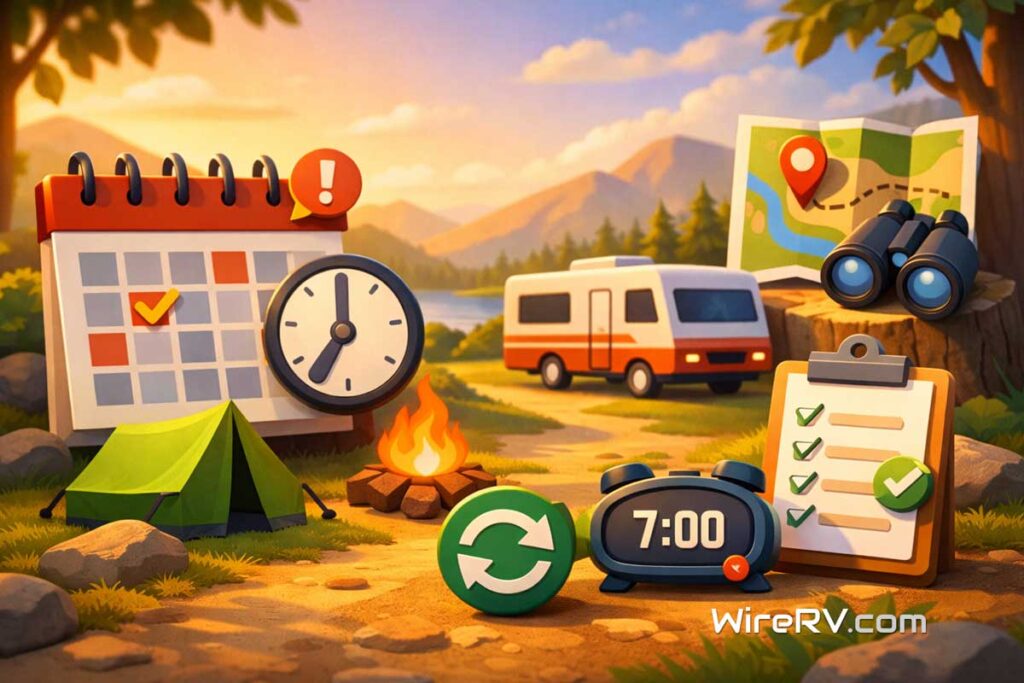
Some RV travelers keep a simple planner or calendar handy to track these booking windows, especially when planning multiple trips.
⚡ The fast campground booking windows plan (how to snag peak dates)
- Pick exact travel dates (primary + backups) and your target loops.
- List each campground’s window (open/close policy + daily release time).
- Set 2 reminders for each date: 24 hours before and 10 minutes before.
Pro Tip: Some RVers use a small atomic clock to make sure they hit booking windows right on time, especially when seconds matter - Be logged in on all portals 10 minutes early specifically with a saved profile and payment method.
Some RVers use a tablet or second device to keep multiple booking pages open at once. - Search from the campground’s map view at the exact release time and book the first workable site—you can optimize later with a rebook/swap.
🗺️ Where to book (and what to expect)
- Recreation.gov (many federal sites): often rolling daily releases at a set time.
- State park systems: release patterns vary; some drop at midnight local, others at morning open (e.g., 7–10 a.m.).
- Private parks: many open dates all at once for the season; also waitlists are common.
Have a second device ready (laptop + phone) so you can search and confirm in parallel.
🔁 Strategy for sold‑out parks
Even if opening day is gone, you still have options:
- Cancellations are also constant. Because travelers adjust routes weekly, check for openings at 7–10 a.m. local and again in the evening; consequently, you will catch most drops.
- Shorten your stay (book 1–2 anchor nights), then extend one night at a time as gaps appear.
- Midweek arrivals are easier than Fridays; so shift your plan by a day if possible.
- Finally, use alerts. Basically, set availability alerts on your dates and site length; respond fast when notified. Make sure notifications are enabled and easy to hear so you can respond quickly when a site opens up.
📆 How far ahead for campground booking windows (2026 overview)
- Spring Break (Mar–Apr): Open now. Prioritize desert, coast, and southern parks; windy corridors book quickly.
- Early Summer (late May–June): Fill rate accelerates after Presidents’ Day; lock these next.
- Peak Summer (July–Aug): Book the moment windows open; set alerts for cancellations.
- Shoulder Season (Sept–Oct): Great weather and lighter crowds—still competitive on weekends.
Planning national parks this spring or summer? See our National Parks RV Travel guide for route timing, length limits, and booking tips: https://wirerv.com/national-parks-rv-travel/
📋 Building your campground booking windows tracker (copy this layout)
Create a simple table you can reuse for every trip. Some RVers use a small dry erase board to track booking windows and update dates quickly.
- Park/Campground
- Loop/Area (length limits, hookups)
- Booking Window (e.g., 6 months; daily at 8:00 a.m. local)
- Earliest Book Date (auto‑calc from arrival)
- Release Time (local)
- Site Length Needed (total including tongue/bikes)
- Backup Dates/Sites
- Notes (generator hours, max stay, vehicle limits)
Pro move: add a column for “Booked/Confirmed” and “Swap Target” so you can upgrade if a better site opens.
⏱️ Release‑time playbook (step‑by‑step)
- 10 min prior: Log in, open campground map, set filters (length, hookups).
- 2 min prior: Refresh and hover on your first‑choice site tab.
Some RVers prefer using a mouse for quicker, more precise clicks when selecting sites on the map. - At release: Claim the first acceptable site; do not overthink it.
- Immediately after: Add calendar reminders to recheck nightly for a closer or shadier site.
📊 Weekend vs. weekday tactics
- Weekends: Book the anchor nights first (Fri/Sat), then fill weekdays around them.
- Weekdays: You’ll find more cancellations Tues–Wed; watch for last‑minute drops.
📏 Length limits and rig fit
Measure bumper‑to‑tongue (towables) or bumper‑to‑bike rack (motorized). A simple tape measure makes it easy to get an accurate total length before booking. When in doubt, filter one size down and bring short hose/cord backups so you can reach hookups without crossing traffic areas.
🧭 Special cases
- First‑come, first‑served (FCFS): Have a plan B nearby and arrive early morning midweek.
- Group sites: Reserve early; they often have longer windows and stricter change rules.
- National park corridors: Some routes pair permit systems with campground windows—research both.
✅ Quick checklist for each target campground
Some RVers keep a simple checklist on a clipboard so everything is easy to review before booking opens.
- Account created and profile complete
- Payment method saved
- Rig length/height verified
- Booking window and daily release time noted
- Alerts set for your dates/length
- Primary and backup dates chosen
- Two device tabs open 10 minutes early
- Anchor nights secured, upgrades on watch
With a clear tracker and a release‑time routine, you’ll grab high‑demand sites without stress—and you’ll have a system you can reuse for every 2026 trip.
Leave a Reply